
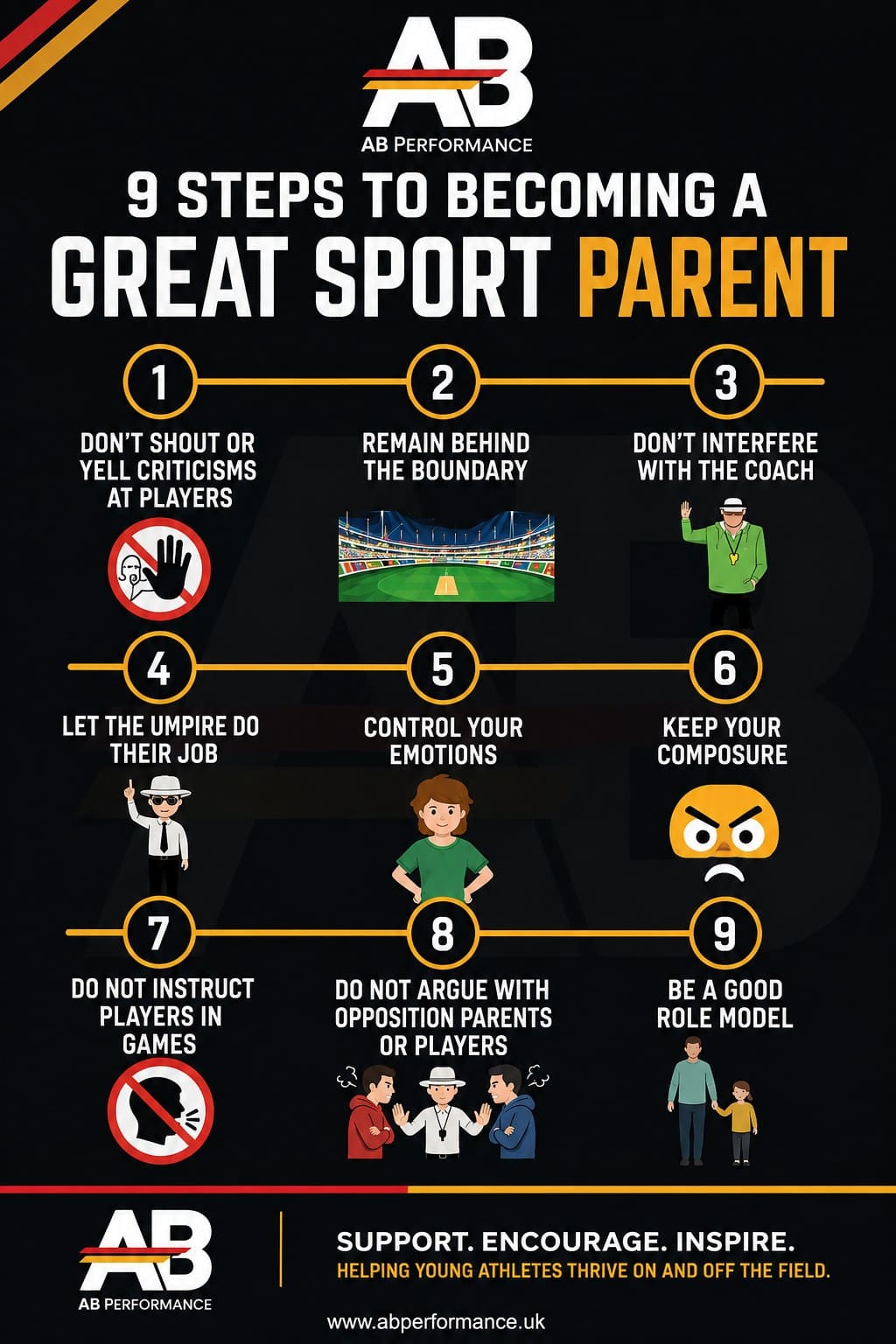
Your child doesn't need another coach; they need you to be a parent. I know first hand how watching your child perform or compete can be one of the most exciting, and sometimes stressful experiences you can have as a parent.
Of course you want them to do well, you also want them to enjoy themselves and fulfil their potential. Because we care so much it can be incredibly tempting to shout encouragement from the sidelines, question decisions and even give instructions.
Sometimes, the best support we can give our children is to step back, as hard as that can be.
Being a great 'Sports Parent' isn't about shouting the loudest, it's about creating an environment where your child feels supported, trusted and most importantly able to enjoy their chosen sport.
I've created 9 simple steps to becoming a great sports parent...
1. Don't shout or yell criticisms at players
Your child is already dealing with a lot, pressure, nerves, expectations and emotions. The last thing they need to hear is criticism from the one person whose opinion matters the most.
Instead of focusing on the mistakes, focus on the effort, the learning and the enjoyment.
Ask: "Did you enjoy yourself?" rather than "Why did you do that?"
2. Remain behind the lines
Allow your child the space they need to compete, being physically and emotionally removed from the action allows them to develop independence and trust their own abilities and decisions.
Sometimes, staying behind the line or the boundary is more powerful than anything you could say.
3. Don't interfere with the coach
Your child's coach has a role; your role is different.
Allow the coach to coach and allow your child to experience different perspectives, feedback and challenges. You don't have to agree with every decision — but your child doesn't need to hear your disagreement straight after a game.
4. Officials make mistakes
Officials make mistakes, coaches will make mistakes, players will make mistakes.
That's sport (and life).
Arguing with an official rarely changes the decision, but it can change the atmosphere around your child. Teach them how to respond to decisions they don't agree with — with composure and respect.
5. Control your emotions
Children don't just listen to what we say. They watch what we do.
If you become angry, frustrated or visibly upset every time something goes wrong, your child will begin to associate mistakes with failure, and not a learning opportunity.
Show them it's ok to feel emotions — but we can choose how we respond to them.
6. Keep your composure
This one is closely connected to controlling your emotions. There will be wins. There will be losses. There will be brilliant performance days and days when nothing seems to go right.
Your child needs to know that your love, support and pride aren't dependent on a result.
Be the calm and collected person they can come back to at the end of a game.
7. Don't instruct players during games
"Pass" "Shoot" "Run" "Watch him"
Even well intended instructions can create confusion.
Your child is trying to process information from their coach, teammates and their own perspective from the environment around them. You are seeing things very differently where you are stood without the pressure of having a player bearing down on you fast.
Let them play.
Give them an opportunity to make decisions, solve problems, learn then move forward.
8. Don't argue with the opposition's parents, players or coaches
Your behaviour doesn't just reflect on you. Your child is watching.
If they see adults arguing, shouting or behaving aggressively, they learn that this is an acceptable response to competition.
Be the parent who demonstrates respect, even when emotions are running high.
9. Be a good role model
This is perhaps the most important one of all.
Your child may forget the score, they may forget the result, they may even forget if they won or lost, but they are more likely to remember how you made them feel.
Show them what good sportsmanship looks like. Show them how to handle disappointment. Show them how to celebrate others and show them that success isn't just about winning.
My final thought
Your child doesn't need you to make them a better athlete, they need you to make them a better human being.
Sport can teach confidence, resilience, teamwork, communication, discipline, humility and how to deal with disappointment.
Sometimes as parents we can become so focussed on performance that we accidentally take away the very things that makes sport so valuable.
Next time you are watching your child compete ask yourself:
"Am I helping my child enjoy their experience or am I adding to their pressure?"
Being a great sport parent isn't about getting everything right. It's about creating a safe environment where your child can try, fail, learn, grow, overcome and enjoy the journey.
- Support. Encourage. Inspire.
- Let the coaches coach.
- Let the officials officiate.
- Let the athletes compete.
- Let the parents be parents.
That may just be one of the greatest gifts you can give your child.
I hope you have enjoyed reading this and more importantly take something away from it.
Thank you.
Diesel.